Your EdTech Vendor Playbook for the TCEA Conference Austin
Maximize your ROI at the TCEA Conference Austin with this EdTech vendor playbook. Learn proven strategies for outreach, booth engagement, and follow-up.
If you're in the EdTech space, the annual TCEA conference in Austin is more than just another event on the calendar. It’s a massive opportunity to get your solutions in front of the very people who shape technology decisions in schools. This is where you can showcase your product, yes, but more importantly, it's where you build real relationships and get a feel for what’s actually happening on the ground in K-12.
Decoding the TCEA Conference Landscape
To make a real impact at TCEA, you have to get inside the heads of the attendees. This isn't your typical corporate trade show. It’s a vibrant gathering of educators who are genuinely passionate about finding better ways to teach and are actively looking for tools to solve their biggest classroom headaches. Showing up with a slick booth and a canned pitch is a recipe for being ignored.
You have to appreciate the event's roots. It started back in 1980 with just 135 educators and a shoestring budget. Now, it boasts 70,000 members and is a major industry force. This history, which you can read more about on the organization's detailed timeline, tells you everything you need to know about the culture. It's purpose-driven and built on a deep commitment to integrating technology in a meaningful way.
Who You'll Meet at TCEA
The expo hall is a busy place, but you'll notice a few key groups walking the floor. To have productive conversations, you need to know who you’re talking to and what they actually care about.
To help you prepare, here's a quick breakdown of the primary attendee profiles you'll encounter.
| TCEA Attendee Profile Snapshot | ||
|---|---|---|
| Attendee Role | Primary Responsibility | What They're Looking For |
| District Administrators (Superintendents, CIOs, CTOs) | Oversee district-wide strategy, budgets, and long-term tech plans. | Scalable, secure, and compliant solutions with a clear ROI. They're thinking big picture. |
| Instructional Technologists & Coaches | Find, vet, and train teachers on new classroom tools. They are the bridge between strategy and execution. | Tools that are pedagogically sound, easy to implement, and come with strong professional development. |
| Curriculum Specialists & Department Heads | Ensure teaching materials align with academic standards and drive student achievement. | Solutions that directly support learning outcomes, engage students in their specific subject, and offer useful data. |
Understanding these different perspectives is the first step. A conversation with a CTO about data security will—and should—sound very different from a chat with a curriculum specialist about student engagement.
Spotting the Hottest EdTech Trends
Before you even step foot in Austin, you can get a read on the conference's pulse. The key is the session schedule. Don't just glance at it—analyze it. Look for the recurring keywords and themes that pop up again and again in session titles and descriptions.
Are there dozens of sessions on classroom AI? Is student data privacy a dominant theme? Are people clamoring for new ways to support English-Language Learners? These are your clues.
A smart vendor doesn't just push a product; they become part of the conversation. When you align your messaging with the hot topics at TCEA, you show educators that you understand their world and have a relevant solution to their most urgent problems.
This isn't just about tweaking your marketing copy. It's about arming your team with the right talking points. When you can connect your tool to a trend everyone is buzzing about, you stop being a salesperson and start being a valuable consultant. That’s how you build credibility and open the door to a real partnership.
Your Pre-Show Outreach Playbook
Let's be honest: the most successful exhibitors at the TCEA conference Austin don't just show up and hope for the best. They walk in with a calendar already packed with qualified meetings. This isn't luck; it's the result of a smart, proactive outreach plan.
This is what separates the perpetually busy booths from the ones where the team is just standing around. Your goal is to start the conversation weeks before anyone sets foot in the convention center. You want to transform your booth from just another stop on the expo floor into a must-visit destination for educators who already know who you are and are genuinely curious to learn more.
First, Pinpoint Your High-Value Targets
You can’t talk to everyone, so the first step is building a laser-focused list of the people you really want to meet. While TCEA won't hand you an attendee list, you can get creative and build your own.
Start by mapping out the Texas districts and schools that are a perfect fit for your solution. Then, dig deeper. Who are the decision-makers you need to connect with? District CTOs? Curriculum directors? Maybe it's the influential instructional technologists who have the ear of leadership.
A great place to hunt is LinkedIn. Search for people in your target roles and see who’s talking about TCEA. They might post about attending or engage with conference-related content—those are your warm leads.
Pro Tip: The conference speaker list is pure gold. These people are confirmed attendees and are, by definition, leaders in their field. A personalized note complimenting them on their upcoming session is a fantastic, non-salesy way to open the door.
For a deeper dive into this process, our guide on how to build accurate https://schooleads.com/blog/email-lists-for-schools offers a structured game plan.
Crafting Outreach That Actually Gets Read
Once your list is ready, you need a message that cuts through the inbox chaos. Generic, copy-paste emails are a one-way ticket to the trash folder. The secret is personalization and value. Your outreach should feel less like a sales pitch and more like a helpful invitation.
A multi-touch email sequence is your best bet. A single email is too easy to miss. Try this proven cadence:
- Email 1 (3–4 weeks out): The Value Offer. Don't ask for anything. Seriously. Instead, give them something useful—a short guide, a relevant case study, or a resource that speaks directly to a challenge you know they're facing.
- Email 2 (2 weeks out): The Soft Invite. Now you can bridge the gap. Reference your last email and mention you'll be at TCEA. This is where you can float the idea of a brief meeting to chat about a specific goal you think you can help them with.
- Email 3 (1 week out): The Easy "Yes". This is your final, friendly nudge. Remind them of your booth number and suggest a specific 15-minute time slot. Make it dead simple for them to accept.
The golden rule here is to give before you get. Offer value first, and you instantly prove you understand their world and respect their time. This simple shift is what gets meetings booked.
Build Buzz on Social Media
Email is powerful, but it shouldn't be your only play. LinkedIn is perfect for warming up these connections before the TCEA conference Austin. A few weeks out, start sending personalized connection requests mentioning your shared interest in the event.
Your company's social channels are also key for building energy. Start talking about your TCEA presence a month in advance, but go beyond just posting your booth number. Give people a reason to be excited to find you.
Here are a few ideas to get you started:
- Sneak Peeks: Post a quick video teasing a new feature you'll be demoing.
- Meet the Team: Share short, friendly profiles of the team members who will be on-site.
- Session Shout-Outs: Post about which sessions your team is excited to attend. It shows you’re there to learn, too.
- Ask a Question: Run a poll asking your audience what EdTech challenges they're hoping to solve at the show.
This kind of consistent, value-driven activity builds familiarity. So when an attendee sees your booth, it’s not a cold introduction. It’s a welcome moment of recognition that makes every conversation start on the right foot.
Creating a Booth That Stops Traffic
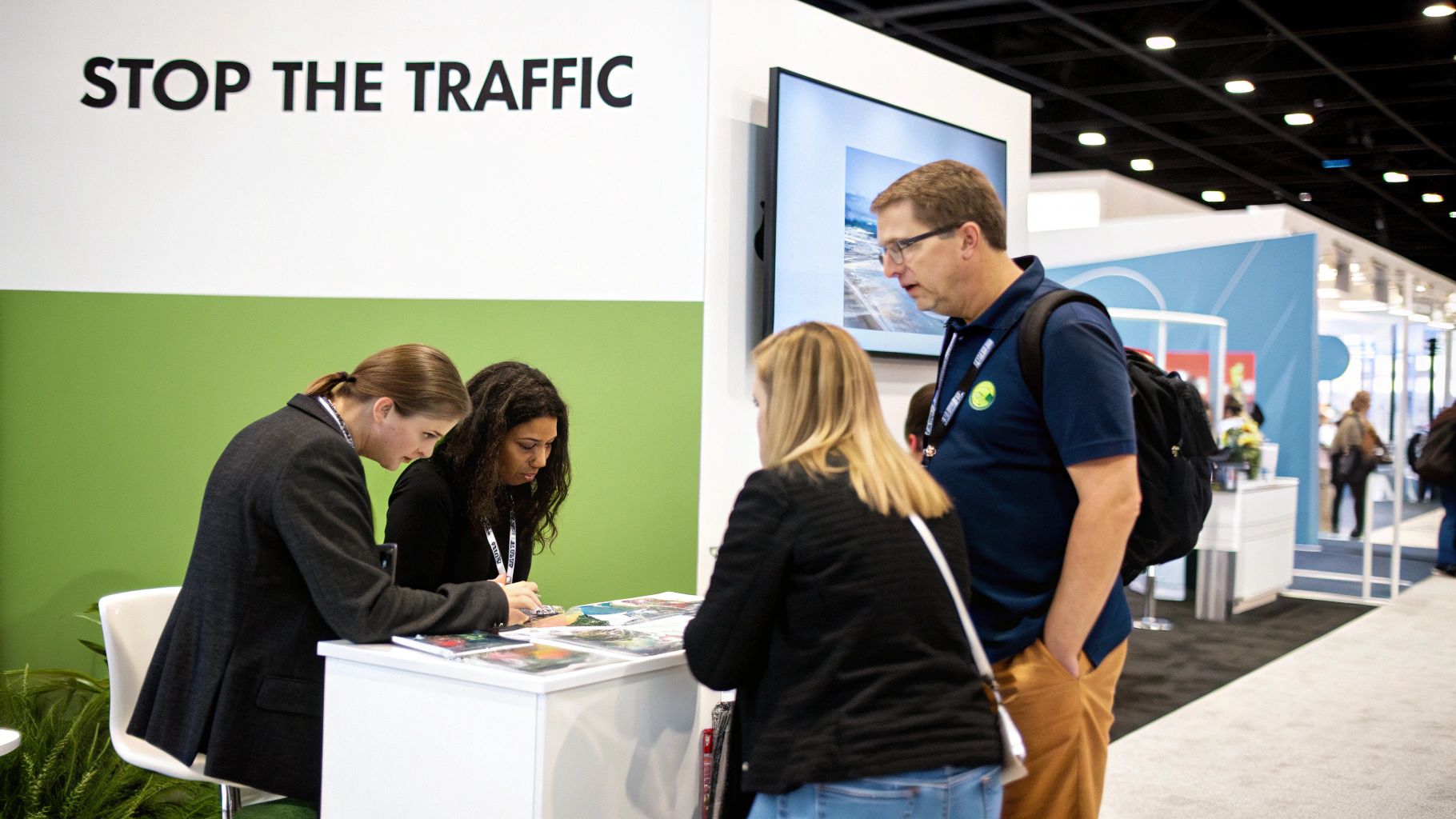
Let's be honest: the expo hall at the TCEA conference Austin is a complete sensory overload. You're up against hundreds of other vendors, all fighting for the same eyeballs. A booth with a couple of pull-up banners and a sad bowl of candy just isn't going to get it done. You'll blend right into the background.
To stand out, your booth needs to be more than just a display—it has to be an experience. The goal isn’t just to be seen; it's to be remembered long after the show floor closes. That means shifting your mindset from passively exhibiting to actively engaging everyone who walks by.
Designing an Interactive Experience
Forget the static displays you've seen a thousand times. Educators are hands-on learners, and they expect the same from the tools they’re evaluating. Your booth should feel like a mini-classroom or a problem-solving hub, not a sales counter.
Instead of just telling attendees what your product does, you need to let them experience it.
Here are a few ideas that actually work:
- Mini Problem-Solving Workshops: Set up a station where an educator can tackle a common classroom challenge using your tool in five minutes or less. If you have a literacy tool, challenge them to create a differentiated reading passage on the spot.
- Quick, Impactful Demos: Nobody wants to sit through a 20-minute product tour. Build a tight, 3-minute demo that focuses on the one "wow" feature that solves a massive pain point for your audience.
- Gamified Challenges: Create a quick, fun challenge on your platform. Offer a small but genuinely desirable prize for anyone who completes it—think a high-quality water bottle or a gift card to a great local Austin coffee shop. This gets people engaging far more deeply than a simple business card drop ever could.
This hands-on approach does more than just attract a crowd. It helps educators truly envision your solution in their own schools, which is a huge step toward an actual conversation later on.
Nailing Your Booth's Form and Function
An interactive experience needs a well-designed space to match. You have about three seconds to make an impression as someone walks by, so every single element—from your messaging to your lighting—has to work together.
Your messaging has to be crystal clear. An attendee should know exactly what problem you solve with a single glance. Ditch the corporate jargon.
Instead of "A Synergistic, Multi-Platform Solution for Pedagogical Enhancement," try something direct and benefit-driven like, "Save Teachers 5 Hours a Week on Lesson Planning." One is confusing; the other starts a real conversation.
Lighting is another crucial piece of the puzzle that too many people ignore. A well-lit booth feels professional, open, and inviting. Use spotlights to highlight your key messages or your demo station. You want to create an atmosphere that makes people want to step in, not walk on by.
Training a Team of Consultants, Not Scanners
Your booth can be a work of art, but its success ultimately comes down to your people. The single biggest mistake vendors make at the TCEA conference Austin is staffing their booth with a team trained to do one thing: scan badges. That approach treats every visitor like a number and completely misses the point of being there in person.
Your team’s job isn't to collect leads; it's to have meaningful, qualifying conversations. They should be consultants who can listen, diagnose problems, and offer real insight.
Before you ever set foot in Austin, run a training session focused on these skills:
- Asking Probing Questions: Arm your team with open-ended questions that get people talking. Move beyond "Can I help you?" to things like, "What's the biggest tech challenge your district is facing this year?" or "What are you hoping to find at TCEA?"
- The 30-Second Pitch: Everyone on your team should be able to crisply explain what your company does, who you help, and what problem you solve in 30 seconds or less. Practice it until it's second nature.
- Quick Qualification: Teach them how to politely figure out if a visitor is a good fit. A simple framework can help them categorize visitors as high-priority decision-makers, key influencers, or end-users, guiding how the conversation proceeds.
This consultative approach changes everything. The interaction becomes a valuable exchange of information, not a transaction, and leaves educators with a positive, lasting impression of your brand.
Networking Beyond the Exhibit Hall
Let's be honest, the exhibit hall is the hub of the TCEA conference Austin, but the real magic often happens far from your booth. Some of the most valuable conversations you'll have will be over lukewarm coffee, during a session Q&A, or in that chaotic shuffle between presentations.
It's a common mistake to chain yourself to your booth, just waiting for people to show up. That’s a passive game. The pros know the entire conference is a networking venue. They’re striking up conversations in the hallways, at the evening socials, and even in the lunch line. The goal isn't a hard sell; it's about building a genuine connection.
This is the long game. A quick, authentic chat about a shared problem builds more trust than a dozen slick demos ever could. It repositions you from just another vendor to a knowledgeable peer who actually gets it.
Strategically Navigate the Session Schedule
Your best prospects aren’t just aimlessly wandering the expo floor—they’re in breakout sessions, actively trying to solve problems. Think of the conference agenda as your treasure map. Before you even get to Austin, you need to scan that session list with a clear purpose.
Hunt for sessions that tie directly to the problems your product solves.
- Selling a tool for English-Language Learners? Find every single session on that topic.
- Your product streamlines district data analysis? Pinpoint the talks aimed at administrators.
- Focused on project-based learning? You know where to go.
These sessions are magnets for educators who are already primed to think about the issues you address. Your job is to be in the room. Grab a seat near the back, listen carefully to the questions people ask, and make a note of the frustrations they're voicing. This is market research Gold.
After the session, you have the perfect, non-salesy opening.
A simple, "That was a great question you asked about data integration—we hear that from a lot of districts," is a fantastic way to start a conversation. It proves you were listening, not just waiting to pounce.
Master the Art of the Authentic Conversation
Success at the TCEA conference Austin isn't about who collects the most business cards. It's about making real, human connections that people remember. That means ditching the elevator pitch and leading with genuine curiosity.
Whether you're at an official social event or just waiting for a session to start, your approach should be the same: lead with questions about them. Ask about their role, what’s happening in their district, or which session they’re most excited about. This simple shift makes people feel seen and valued. It also gives you critical intel on whether they might actually be a good fit down the road. If you want to get better at this, learning about the different types of K-12 purchase decision-makers can help you tailor your questions and steer the conversation.
Just remember the 80/20 rule of conference conversation: spend 80% of your time listening and only 20% talking. People remember great questions far more than a great pitch.
Use the Conference App to Your Advantage
Don't sleep on the official TCEA conference app. It's so much more than a digital schedule; it's a powerful networking tool. Most attendees and speakers have profiles, and there’s usually a messaging feature built right in. This is your chance to turn a fleeting moment into a scheduled meeting.
Here's a simple, repeatable workflow:
- Spot Key People: After a great session, look up the speaker or an attendee who asked a really sharp question.
- Send a Specific Note: Fire off a quick connection request that references something specific they said. "Great point about student privacy in the AI session!" is infinitely better than a generic "Let's connect."
- Propose a Next Step: If it feels right, suggest a quick 10-minute chat at your booth tomorrow to continue the discussion.
This is how you bridge the gap between a hallway chat and a real lead in your pipeline. It shows you’re proactive and respectful of their time, making them far more likely to engage with you once the conference chaos is over.
Building a High-Conversion Follow-Up System
The lights dim, the last box is taped shut, and your team is running on fumes. It’s so easy to think the work is done, but honestly, the most important part of your TCEA conference Austin investment is just getting started. That stack of badge scans holds a ton of potential, but without a rock-solid follow-up plan, it’s just a list of names.
To turn those quick booth conversations into a real sales pipeline, you need a system that's ready to roll the second you leave the convention center. Speed, context, and relevance are everything here. An educator's interest fades fast, and a generic email a week later is going to fall completely flat.
Setting Up a Flawless Lead Capture System
Your follow-up strategy actually begins on the show floor. Just scanning a badge is the bare minimum; it's the context of the conversation that really matters. The specific pain points an administrator shared or the curriculum gaps a teacher mentioned—that's what turns a cold contact into a warm, qualified lead.
Get your team into the habit of adding quick, meaningful notes to every single scan. Most badge scanning apps have a notes field or custom tags. Train everyone to grab three key details after every good chat:
- Their Core Problem: What’s the specific challenge they’re facing? (e.g., "Struggling with ELL student engagement in math.")
- Key Interest: What part of your solution made their eyes light up? (e.g., "Loved the real-time translation feature.")
- Next Step: What did you agree to do next? (e.g., "Wants to see a demo with her 4th-grade team.")
This information is pure gold. It allows you to craft a follow-up that's incredibly personal and proves you were actually listening, not just collecting contacts.
I've seen it time and time again: the difference between a successful event and a failed one boils down to the quality of the notes taken on the show floor. One insightful note is worth more than a dozen context-free badge scans.
How to Prioritize Your Hottest Leads
Let’s be real: not all leads are created equal. The district superintendent who asked for a pricing sheet needs a much different (and faster) response than the teacher who was just grabbing some free swag. A simple lead scoring system helps you focus your team’s precious time and energy where it counts the most.
You don't need a crazy algorithm. A basic point system that your team can apply on the fly works perfectly.
Example Lead Scoring Model:
- Decision-Maker (+10 points): Superintendent, CTO, or curriculum director?
- Expressed Budget (+5 points): Did they mention having a budget for this kind of purchase?
- Requested Demo/Meeting (+10 points): Did they specifically ask for a follow-up call or demo?
- High Engagement (+5 points): Did they hang around the booth asking detailed questions?
When you get back to the office, a quick sort by score instantly shows you who gets a personal phone call on Monday morning and who goes into a longer-term email nurture. This simple step ensures your best opportunities get the white-glove treatment they deserve.
The Proven Post-Show Follow-Up Cadence
Okay, your leads are captured and scored. Now it's time to execute. The goal of this cadence is to stay top-of-mind by being timely and relevant, but without being a pest.
Here’s a sample timeline you can adapt. The key is to blend personal outreach with helpful, automated touches.
Post-TCEA Follow-Up Cadence Example
| Day | Action | Content Focus |
|---|---|---|
| Day 1 (Within 24 hours) | Personalized Email | A short, personal "great to meet you" note. Reference your conversation and provide the one thing you promised (a link, a case study, etc.). |
| Day 3 | Value-Add Email | Send a high-value resource that speaks directly to their problem. This could be a case study from a similar district or a helpful guide. No sales pitch. |
| Day 5 | LinkedIn Connection | Send a personalized connection request. Again, jog their memory by mentioning your chat at the TCEA conference Austin. |
| Day 7 | Follow-Up & Demo Offer | Circle back to your first email. Now is the time to make a clear, easy-to-accept offer for a brief meeting or a more formal demo. |
| Day 14 | "Breakup" Email | A final, friendly email to close the loop. Something like, "I'm guessing this isn't a priority right now, so I'll stop reaching out." You'd be surprised how often this one gets a response. |
A structured approach like this ensures no lead ever falls through the cracks.
By plugging these contacts directly into your CRM and automating some of the initial touchpoints, you can manage this process at scale. The winning formula is blending automation for efficiency with genuine personalization for your top-tier prospects. That's how you turn your TCEA investment into real, measurable ROI.
Your Top TCEA Questions, Answered
If you're heading to the TCEA Convention in Austin, you're not alone in feeling the pressure to make it count. After working with countless EdTech companies over the years, we've seen the same questions pop up again and again. Here’s some straightforward, no-fluff advice based on what actually works.
How Do I Actually Get Meetings with School District Leaders?
Forget the mass email blasts. District leaders can spot a generic, copy-pasted message from a mile away, and it goes straight to the trash. The only way to get on their calendar is to do your homework long before you set foot in Austin.
Your outreach needs to be deeply personal. Reference a specific initiative you read about on their district's website. Mention a session they're scheduled to attend at TCEA. This simple act shows you’ve put in the effort and aren't just spamming a list.
Try an opener like this: "I saw on your district's strategic plan that you're focusing on early literacy outcomes this year. We're actually debuting a new assessment tool at TCEA that directly addresses this, and I thought it might be relevant to your work." See the difference? You're starting a conversation as a helpful partner, not just another vendor trying to sell something.
What's the Best Way to Measure ROI from the Show?
ROI is about so much more than how many badges you scanned. Anyone can get a big number there. The real measure of success is the quality of the sales pipeline you build from the event.
To get a clear picture, you need to track a few key things:
- Cost Per Lead (CPL): This gives you a baseline for how efficient your spending was.
- Customer Acquisition Cost (CAC): How many of those TCEA leads actually signed on the dotted line? This connects the event directly to your bottom line.
- Pipeline Influence: Don't forget the deals that were already in motion. Did a conversation at TCEA help push an existing opportunity over the finish line? That's a huge win.
Also, think beyond the hard numbers. A simple question in your post-purchase survey—"Did meeting us at TCEA influence your decision?"—can give you incredibly valuable feedback for planning next year's strategy.
What Are the Biggest Mistakes First-Time Vendors Make?
The most common—and most expensive—mistake is showing up with an undertrained booth staff. If your team's main goal is just to scan every badge that comes near, you’re missing the entire point of being there. They need to be more like consultants, trained to have real conversations that qualify (or disqualify) a prospect on the spot.
The other massive fumble is having no real plan for what happens the minute the show ends. The energy and excitement from a great booth conversation at the TCEA conference Austin disappear fast. If you wait a week to send a generic "nice to meet you" email, those warm leads will have already gone cold.
Finding the right district leaders to even start your pre-show outreach is often the biggest challenge. Schooleads offers a premium, verified database of K-12 decision-makers, so you can stop guessing and start building targeted prospect lists in minutes. Start building your high-value TCEA meeting list today.