
How to Market to Schools A Modern Playbook for K-12 Vendors
Discover how to market to schools with this modern playbook. Learn proven strategies for reaching decision-makers and navigating the K-12 sales cycle.
Selling to schools isn't like selling to a regular business. It's a world driven by a mission, not just profit. To succeed, you need to be patient, build genuine relationships, and understand the intricate ecosystem you're stepping into. This means getting to know the right people, matching what you offer to their specific needs, and respecting the long, cyclical rhythm of the school year. The goal is to stop being a vendor and start being a trusted partner.
Understanding the K–12 World
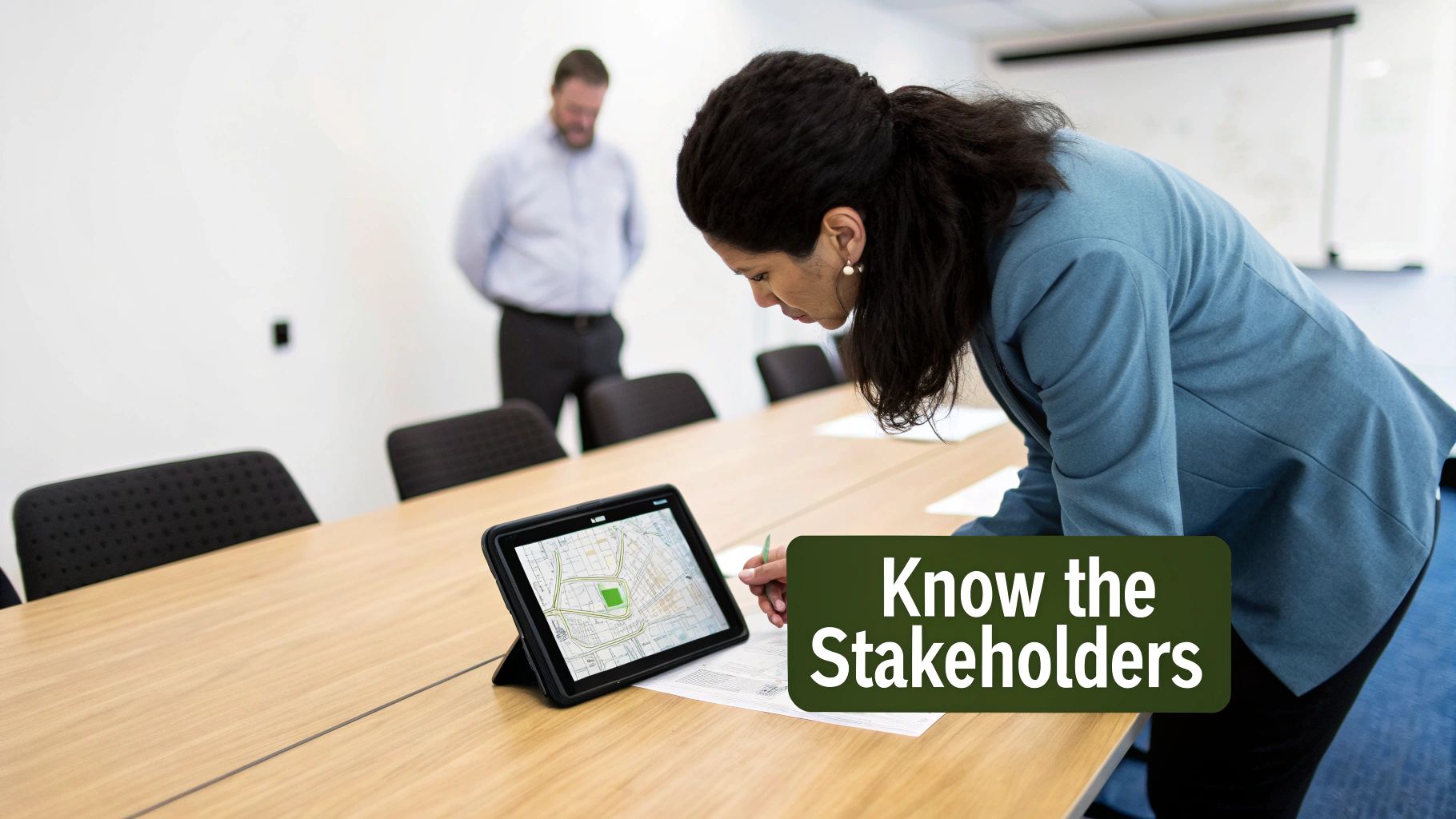
Before you ever draft an email or pick up the phone, you need to get one thing straight: schools are unique. Their success is measured in student growth, not quarterly earnings. This fundamental difference influences every decision they make, from purchasing new software to forming new partnerships. From the outside, the K–12 market can look like a maze of stakeholders, regulations, and timelines.
Your success depends on mapping out this ecosystem. Simply targeting "teachers" or "principals" is a surefire way to get lost. You have to dig deeper to find out who controls the budget, who influences the decision, and who will actually use your product every day.
Who's Who in the Buying Process?
A single purchase often involves a whole committee of people, and each one has their own set of priorities and problems they need to solve. Imagine a district is considering a new literacy software. The decision will likely involve:
- A Curriculum Director: They’ll be focused on how it aligns with state standards and if it’s backed by solid educational research.
- An IT Administrator: Their concerns are all about data security, privacy compliance (like FERPA), and whether it plays nice with their existing tech.
- A School Principal: They're wondering if teachers will actually use it, what kind of training is needed, and if it will improve student outcomes.
- The Superintendent or Business Manager: This is who signs the check. They need to see a clear return on investment and justify the budget expense.
If you can't speak to each person's concerns, your deal will likely stall. We've put together a more detailed look at the key purchase decision-makers in education if you want to dive deeper.
To help you get started, here’s a quick overview of the key players and what matters most to them.
Key Decision-Maker Roles in K-12 Purchasing
| Role Title | Primary Influence | Common Pain Points |
|---|---|---|
| Superintendent | Sets district-wide vision, approves major budgets, and focuses on long-term strategic goals. | District performance metrics, board relations, fiscal responsibility, community perception. |
| Curriculum Director | Evaluates instructional materials, ensures alignment with standards, and leads professional development. | Gaps in curriculum, teacher burnout, meeting diverse student needs, staying current with pedagogy. |
| Principal | Manages daily school operations, teacher support, and student achievement at the building level. | Teacher retention, student discipline, parent communication, improving test scores. |
| IT Director | Oversees technology infrastructure, data security, and system integrations. | Cybersecurity threats, limited bandwidth, integrating new tools with old systems, data privacy compliance. |
| Teacher | The end-user. Provides feedback on usability and impact in the classroom. | Lack of time, student disengagement, managing different learning levels, limited resources. |
Understanding these different perspectives is crucial. You're not just selling a product; you're providing a solution that has to work for everyone involved.
Connect Your Solution to Real School Challenges
Your product is only as good as the problem it solves for a school. To really connect, you have to frame your message in their language and show you understand their world.
The most successful companies in K-12 aren't just selling a product; they're selling a solution. They become genuine partners in improving student outcomes, making teachers' lives easier, or meeting complex compliance rules.
Don't lead with a list of features. Lead with the benefits. Does your tool help boost graduation rates? Can it support English Language Learners? Is it eligible for specific funding like Title I, which helps schools serving low-income families? Answering these questions shows you’ve done your homework and are truly invested in their mission.
Finally, you have to respect the academic calendar. The school year has a predictable flow of planning, budgeting, buying, and implementing. Trying to push for a big decision in May—right in the middle of state testing and end-of-year chaos—is a strategy doomed to fail. The real key is to build relationships patiently throughout the year. That's how you gain the trust and momentum needed to close deals and build partnerships that last.
Navigating School Budgets and Buying Seasons

In the K-12 world, timing is everything. It's not just a good idea; it's a hard-and-fast rule. Pitching a principal during state testing week is like asking a chef to try a new recipe during the dinner rush—it just won’t fly. The school year runs on a predictable cycle, and if you don't align your outreach to that rhythm, you're dead in the water.
This is all about knowing when educators are open to new ideas and when their doors are firmly shut. Trying to book a demo in late May is a waste of everyone's time. But, if you connect with a curriculum director in January as they’re starting to map out next year’s budget? Now you’re talking. You've just positioned yourself as a timely, relevant solution.
This isn’t about getting lucky; it's about being strategic. To effectively market to schools, you have to map every touchpoint to their procurement cycles, which almost always follow a familiar four-act structure.
The Four Phases of the School Buying Cycle
Selling to schools is a marathon, not a sprint. The whole process unfolds over the entire school and fiscal year, with very distinct windows for planning, evaluating, buying, and implementing.
- Planning and Budgeting (January – April): This is when schools are in discovery mode. District leaders and principals are assessing what they need, exploring what's out there, and starting to sketch out their budgets for the fall. Your job here is to simply get on their radar.
- Evaluation and Selection (May – July): By late spring, budgets are often getting approved. This is when things get serious. Decision-makers start narrowing down their options, RFPs (Requests for Proposals) go out, and committees are formed to see what you've got. It's prime time for demos and pilot programs.
- Purchasing and Procurement (July – September): The money is officially on the move. Purchase orders are cut, contracts get signed, and funds are spent before the back-to-school chaos truly begins. This window can slam shut quickly, so you need to be ready to go.
- Implementation and Professional Development (August – October): Once the deal is done, the real work begins. This period is all about onboarding, training, and providing stellar support. Your goal is to make sure teachers feel confident and ready to use your product from day one.
A rookie mistake is to pour all your energy into the "Purchasing" phase. By that point, the decisions have mostly been made. The real wins happen in the Planning and Evaluation stages, where you have the time to build relationships and prove your value long before a PO is even a possibility.
Syncing Your Outreach to the School Calendar
So, how do you turn this knowledge into an actual plan? A generic email blast in October is going to get deleted, but a well-timed webinar in February could fill up fast.
Think about it this way: if you sell a new math curriculum, you should be hosting informational webinars and sharing case studies from January to March. That’s when curriculum directors are actively hunting for new solutions to write into their budget proposals.
Then, as spring rolls in, you pivot. From April to June, your focus should shift to targeted outreach, personalized demos for those evaluation committees, and responding to any RFPs. The conversation changes from big ideas to the nitty-gritty of features, pricing, and implementation.
Once summer hits, it’s all about closing the deal. July and August are for finalizing contracts and getting professional development sessions on the calendar. Your marketing should be about partnership and support, reassuring new customers that you’ve got their back for the year ahead. Get the timing wrong, and you'll find your growth stalls before it even has a chance to start.
Crafting Your Multi-Channel Outreach Plan

Let's be honest: relying on a single channel to reach educators just doesn't cut it anymore. Their inboxes are overflowing, and their schedules are packed. If you're not showing up in a few different places, you're not showing up at all. A one-dimensional approach is a fast track to being ignored.
To actually get noticed, you need an integrated, multi-channel plan that meets decision-makers where they already are. This isn't about spamming the same generic message across every platform. It's about creating a cohesive journey.
Think of it this way: a sharp email can set the stage for a productive phone call. A great chat at a conference can be followed up with a piece of valuable content. Each touchpoint should build on the last, creating a presence that feels helpful and persistent, not pushy. This approach shows you respect their time and makes them far more likely to listen.
Mastering Email for K-12 Engagement
Email is still the workhorse of K-12 marketing, and for good reason. When done right, it's a powerful way to get directly in front of principals and superintendents. We see benchmarks showing an impressive 37.35% open rate—way higher than what you see in most other industries.
But you can't just blast out a generic newsletter and hope for the best. Your emails need to be sharp, personal, and timed perfectly. This is where a high-quality school database becomes your secret weapon, letting you slice and dice your audience with precision.
Instead of a one-size-fits-all message, you can tailor your content. An email to a curriculum director should probably highlight how you align with state standards. But for an IT administrator? You'll want to lead with data security and easy integration.
Pro Tip: Your first email should never be a sales pitch. Seriously. The goal is to be helpful. Share a relevant case study, a link to a practical guide, or an invite to an insightful webinar. Give them value first to build credibility. The ask can come later.
Making Strategic Phone Calls That Actually Connect
No, the phone isn't dead. But the cold call certainly is. Dialing with a generic script is a waste of everyone's time. Today, the phone is a tool for building genuine rapport and qualifying leads you've already warmed up elsewhere.
A strategic call might follow an email you saw a principal open three times. Or maybe it’s a follow-up after someone from their district downloaded your latest guide. Having that context changes everything—it turns an interruption into a relevant conversation.
The goal of that first call isn't to close a deal. It's to listen. Ask open-ended questions to get a real sense of their challenges, goals, and priorities. You’re trying to find out if your solution is even a good fit. That simple qualification step saves both of you a ton of time down the road. For a deeper look at building this out, our guide on a cohesive education marketing strategy is a great resource.
Maximizing Your Impact at Events and Conferences
Industry conferences like ISTE or ASCD are goldmines for face-to-face time, but that stack of business cards you collect is worthless without a solid game plan. The real work starts the moment the event ends.
Before you even get on the plane, have a system ready for capturing and categorizing leads. A simple tagging method in your CRM or even a spreadsheet can make all the difference.
- Hot Lead: Had a great conversation, they have a clear need, and they asked you for a demo.
- Warm Lead: Showed interest and asked good questions, but the timing isn't right. Add them to a long-term nurture sequence.
- Curiosity: Just stopped by for the free pen. Add them to your general newsletter.
This quick sorting lets you tailor your follow-up. Hot leads get a personal email and a call within 24-48 hours, referencing the specific chat you had. Warm leads can be dropped into an automated sequence that drips out useful content over the next few months, keeping you on their radar.
Using Content to Generate Warm Leads
Content is the bedrock of any modern outreach plan. When you create and share genuinely useful resources, you stop being just another vendor and start becoming a trusted partner. This is how you attract educators who are already looking for solutions.
Your content needs to speak directly to the real-world problems your audience is dealing with. What’s keeping a principal or department head up at night?
- Webinars: Host a panel with respected educators on a hot topic like "Practical Ways to Support Teacher Well-being" or "Integrating AI into the Classroom."
- Practical Guides: Create downloadable checklists or short ebooks, like "A Principal's 5-Step Guide to Vetting New EdTech" or "Simple Strategies for Boosting Family Engagement."
- Case Studies: Nothing sells like social proof. Show how you’ve helped a district just like theirs solve a problem they’re facing right now.
By offering these resources in exchange for an email, you're building a pipeline of warm, qualified leads. These are people who have already raised their hand and shown interest, which makes the follow-up sales conversation feel completely natural.
Crafting Messages That Connect with Educators
To get anywhere in K-12, you have to understand one thing: educators are mission-driven, always short on time, and have a finely tuned radar for generic sales pitches. If you want even a moment of their attention, your message can't just be about what you sell. It has to be about who you serve.
Generic, feature-heavy emails are destined for the trash folder. Your communication needs to feel authentic, empathetic, and genuinely helpful. The goal is to shift their perception of you from just another vendor to a potential partner in their core mission: educating students. Getting that right changes everything.
The Art of the Subject Line
An educator’s inbox is a battlefield for attention. Your subject line is the single most important factor in whether your message gets opened or simply deleted. It needs to be specific, relevant, and completely free of hype.
Instead of vague, clickbait-style lines, focus on providing immediate context and value. A subject line like "A Quick Question About Anytown Middle School's Science Curriculum" is miles more effective than "Revolutionary New Science Platform." It proves you’ve done your homework and have a real reason for reaching out.
The best subject lines feel less like marketing and more like a conversation starter from a colleague. They are personalized, concise, and signal that the content inside is relevant to the recipient's specific role and challenges.
Speaking Their Language
Once they’ve opened your email, the clock is ticking. You have just a few seconds to prove it's worth reading. Ditch the corporate jargon and buzzwords immediately. You need to frame your solution in the context of their world—improving student outcomes, supporting teachers, and making administrative tasks less painful.
- Instead of this: "Our platform leverages AI to streamline workflows."
- Try this: "We help teachers at schools like yours save about 5 hours a week on grading, giving them more time for one-on-one student support."
See the difference? This simple change moves the focus from your product's feature to its direct, tangible benefit for them. It shows you get that their most valuable resource is time. Remember, the hero of this story should always be the educator, not your product.
Understanding what not to do is just as important as knowing what works. Here’s a quick rundown of common mistakes I see all the time.
Effective vs. Ineffective Outreach Tactics
This table breaks down some common tactics, explaining why so many fail and offering a better way to approach your outreach.
| Tactic | Why It Fails | A Better Approach |
|---|---|---|
| Generic Email Blasts | Lacks personalization and shows no understanding of the recipient's specific needs or school context. It feels like spam. | Personalized Outreach |
| Feature-Focused Language | Focuses on what your product is rather than what it does for students and teachers. It forces them to connect the dots. | Benefit-Driven Language |
| Vague Subject Lines | Fails to stand out in a crowded inbox and gives no compelling reason to open the email. | Specific Subject Lines |
| Immediate Hard Sell | Asks for a demo or a sale in the first email without establishing any trust or providing value. It's premature and off-putting. | Value-First Approach |
Ultimately, a thoughtful, value-driven approach will always outperform a generic, high-volume one in the K-12 space.
Designing a Follow-Up Sequence That Helps, Not Harasses
Let's be real: most of your initial emails will go unanswered. That’s completely normal. The real art is in the follow-up. A well-designed sequence can build familiarity and trust over time, but a clumsy one just feels like harassment.
Your goal is to create a multi-touch cadence that feels helpful, not desperate. I recommend mixing different channels and varying the content of your messages so you’re not just saying "checking in" over and over.
For example, a simple three-step sequence might look like this:
- Email 1: A highly personalized message referencing a specific school initiative or challenge. Offer a relevant resource (like a case study or a guide) with no hard ask.
- Email 2 (4 days later): A brief follow-up sharing a different, valuable piece of content. Maybe a short video testimonial from a teacher in a similar district.
- Brief Phone Call (7 days later): A quick call referencing the emails. The goal isn’t to pitch, but simply to ask, "I sent over a resource about improving student engagement—did that resonate with any of the goals you have for this year?"
This approach respects their time while gently keeping your solution on their radar. Each touchpoint provides value, which builds your credibility and earns you the right to eventually ask for a meeting. This patient, helpful strategy is fundamental to how you can effectively market to schools.
Turning Pilot Programs into District Partnerships

For most edtech companies, the pilot program is where the rubber meets the road. It’s the single most effective way to land a district-wide deal, moving your product from a promising idea to a proven solution. This is your chance to build an undeniable case for a larger investment, turning a small "yes" from one enthusiastic school into a long-term partnership.
But be warned: a poorly planned pilot can do more harm than good. It can drain your resources, burn out your biggest fans, and kill your momentum for good. The trick is to treat a pilot not as a free trial, but as a strategic, data-driven project with clear goals and dedicated support right from the start.
Think of this as your roadmap for designing and running pilots that don’t just prove your value but also build a groundswell of internal support.
Designing a Pilot Built for Success
A winning pilot starts long before the first student logs in. It all comes down to careful planning and getting the right people on board. You have to be incredibly picky about where you run your pilot and crystal clear about what success looks like for everyone involved.
First things first: find your champions. You need to identify those enthusiastic teachers and tech-savvy principals who are genuinely excited to try something new. A pilot led by a reluctant participant is dead on arrival. Seek out the educators who are already hunting for a solution like yours—they’ll become your most powerful advocates.
With your champions identified, it’s time to set clear, measurable goals together. Vague objectives like "improve engagement" won't cut it. You have to get specific.
- For Teachers: Is the goal to slash lesson planning time by 20%? Or to make differentiated instruction a daily reality instead of a once-a-week thing?
- For Students: Are you aiming for a 10% jump in scores on a key benchmark assessment? Or maybe a noticeable drop in absenteeism for a specific group?
- For Admins: Could the objective be to streamline a painful reporting process or prove compliance with a new state mandate?
Setting these concrete goals gives the pilot a real purpose and, just as importantly, gives you the exact data points you'll need to make your case later.
A pilot isn't just about proving your product works; it's about proving it works for them. When you co-create the success metrics with the school, they become invested in the outcome. The data you collect will be exactly what the district-level decision-makers want to see.
Executing Flawlessly and Gathering Proof
Once the pilot kicks off, your level of support is what will make or break it. This is not the time to be hands-off. You need to provide exceptional, proactive support to your pilot teachers. I’m talking about regular check-ins, dedicated training, and lightning-fast responses to every question.
Your goal is to make your champions look like heroes for bringing you into their school. When they succeed, you succeed.
Throughout the pilot, your main job is to collect evidence. This evidence needs to come in two critical forms: the hard numbers and the human stories.
- Hard Data: Track everything against the specific metrics you set at the beginning. Use your platform’s analytics to whip up simple, visual reports showing usage, progress, and outcomes. This is the proof that speaks directly to superintendents and the people holding the purse strings.
- Compelling Stories: Numbers are powerful, but stories are what truly resonate with educators. You have to actively collect testimonials from teachers and students. Record short video interviews, get written quotes, and document those specific "aha!" moments you see in the classroom.
These stories provide the emotional weight that data alone can't carry. A quote from a respected teacher about how your tool saved her hours of work each week can be far more persuasive than any chart or graph.
Finally, tackle compliance topics like data privacy early and with full transparency. Showing that you are fully compliant with FERPA and the district’s security protocols builds immediate trust. It removes a major hurdle when it's time to talk about a district-wide rollout. By demonstrating real-world impact and building a network of internal fans, you turn a simple pilot into an unstoppable partnership.
It’s a Partnership, Not a Payday
You landed the contract. Great. But if you think your job is done, you're making a rookie mistake. In the K-12 world, that signed paper isn't the finish line; it's the starting gun. The most successful edtech companies know this instinctively. They don't just "sell" to schools—they forge partnerships.
This shift in mindset, from transaction to relationship, is everything. Your reputation for being a true partner, one who sticks around long after the check has cleared, will travel faster than any marketing campaign you could ever run.
Are You Measuring the Right Things?
Forget just looking at this quarter's sales numbers. To really understand the health of your K-12 business, you need to track the metrics that reveal the true strength of your school relationships. These are the numbers that actually predict long-term, sustainable growth.
Here’s what you should be obsessed with:
- Pilot Conversion Rate: How many of your free trials or pilots actually turn into paid contracts? If this number is high, it means your product is delivering on its promises and your support during the trial period is on point.
- Customer Lifetime Value (CLV): What’s the total revenue you can expect from a single school or district over the entire time they work with you? Growing your CLV is a direct sign that you're keeping customers happy year after year.
- Annual Renewal Rate: This is the big one. What percentage of schools sign back on each year? A high renewal rate is the single best indicator that your product has become indispensable.
- Net Promoter Score (NPS): On a scale of 0-10, how likely are your teachers and admins to recommend you to a colleague? This score tells you if you have a base of happy customers or a growing army of detractors.
When you focus on these KPIs, you naturally start prioritizing what matters most: making your current schools successful.
Don't Wait for the S.O.S. Signal
If the only time you hear from a school is when something is broken, you’re already on the fast track to non-renewal. You can't afford to be reactive. A proactive customer success plan is about making sure your tool becomes a critical part of their workflow.
This means scheduling regular check-ins. And I'm not just talking about with the district administrator who signed the deal. Get on the phone with the teachers and instructional coaches who are in the trenches using your product every single day. These conversations are gold. They give you a chance to solve small frustrations before they boil over into deal-breakers.
Your goal is to embed your solution so deeply into the school's daily life that the thought of not renewing feels disruptive and painful. You want to become part of the very fabric of how they operate.
Support Isn't a One-and-Done Onboarding
A 60-minute onboarding session at the start of the year is not enough. Not even close. To get real, lasting adoption, you need to provide continuous support and professional development that respects how busy educators are.
Think about offering short, monthly webinars on specific features. Create a library of 2-minute "how-to" videos that a teacher can watch during their planning period. Build out a collection of lesson plans or classroom activities that incorporate your tool. Show them you get it—you understand their world and you're there to make their lives easier, not harder.
When you invest in your schools' success, something powerful happens. Your best customers stop being just customers. They become your most credible and effective marketers, telling their friends and colleagues in other districts all about their great experience. That’s how you build an unstoppable growth engine.
Of course, building these lasting relationships starts with connecting with the right people from day one. Schooleads offers a premium K-12 database with verified contact info for principals, superintendents, and curriculum directors across the US. It's how you get your foot in the door with the leaders who can become your long-term partners. Check out the Schooleads database.