Data Driven Decision Making in Education: A Guide for K-12 Leaders
Discover data driven decision making in education to boost student outcomes. Practical, data-backed strategies for K-12 leaders.
When we talk about data-driven decision-making in education, we're really talking about using real information—not just gut feelings—to make smarter choices for students. It means looking at things like test scores, attendance records, and even how engaged students are in class to guide everything from teaching methods to where to put resources.
It’s a shift from "I think this will work" to "the evidence shows this works."
What Is Data-Driven Decision-Making in Education?
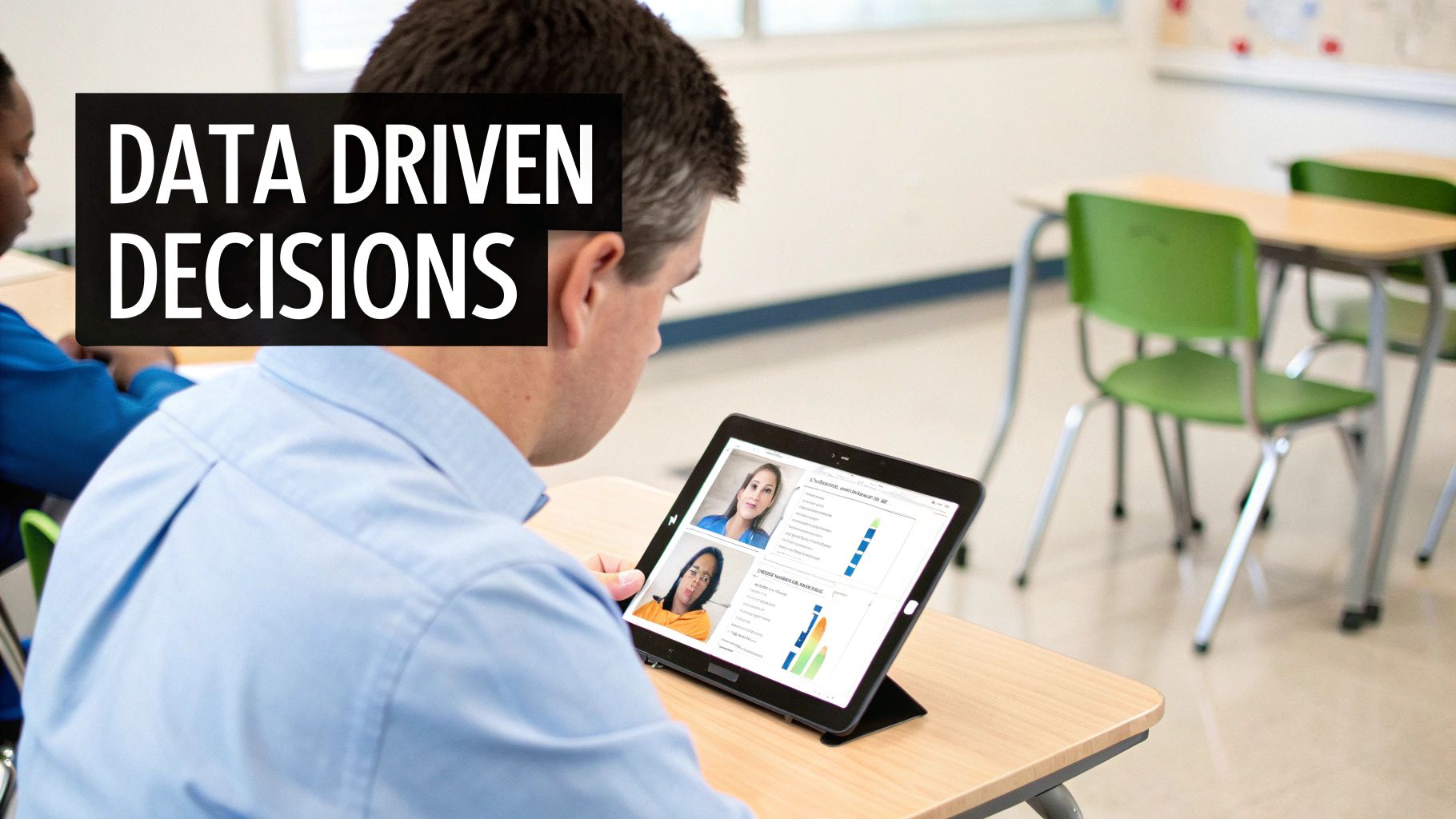
Think of a good doctor. They don’t just guess what’s wrong. They run tests, study the results, and use that hard evidence to pinpoint the problem and prescribe the right treatment. That’s exactly what data-driven decision-making brings to schools.
This isn’t just about staring at standardized test scores once a year. It’s about weaving together all kinds of information to get a full, honest picture of what’s happening in our schools.
The Shift from Intuition to Insight
For years, educators relied on their professional judgment and experience, and for good reason—those things are incredibly valuable. But today, we can add a powerful layer of objective evidence to that expertise. By tracking the right numbers, we can spot patterns we might have otherwise missed, understand what students truly need, and make changes that actually move the needle.
In schools that have fully embraced data, the results speak for themselves. They often see much bigger jumps in academic performance than schools sticking to older methods. When leaders track everything from enrollment trends to student engagement, they can see exactly where a little extra support will do the most good. You can read more about the impact in this overview from the University of Kansas.
At its core, data-driven decision-making is about asking better questions. Instead of "What do we think is working?" we can ask, "What does the data show is working, for which students, and under what conditions?"
What This Looks Like in Practice
This isn't about replacing teachers with spreadsheets. It’s about giving them better information so they can do what they do best, even better. A school that truly uses data can:
- Identify At-Risk Students Early: By flagging patterns in attendance, grades, and behavior, schools can step in to help students long before they fall too far behind.
- Refine Instructional Methods: Teachers can look at classroom data to see which lessons are landing and which aren’t. This allows them to adjust their teaching on the fly to meet the needs of different learners.
- Allocate Resources Effectively: District leaders can use data to make sure that funding, staff, and special programs are going to the schools and students who need them most.
The Core Benefits of Using Data in K-12 Schools
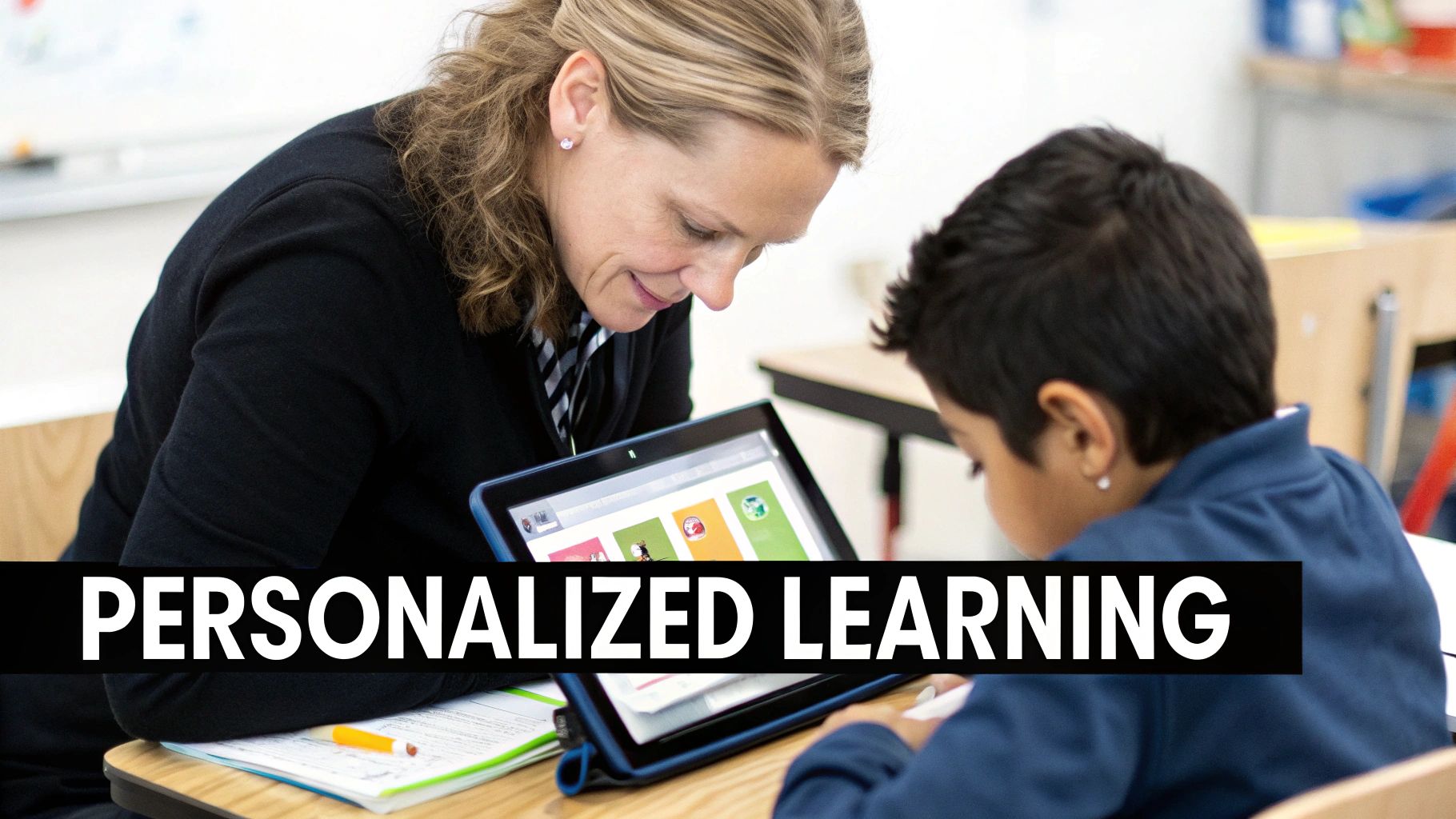
When a school truly embraces data, the benefits go way beyond numbers on a spreadsheet. It’s a fundamental shift from a one-size-fits-all approach to a dynamic environment where decisions are guided by real evidence. The impact can be felt by everyone—students, teachers, and administrators.
This shift helps school leaders pinpoint the root cause of a problem. Instead of just guessing why third graders are falling behind in math, you can dig into assessment data and see exactly which concepts are tripping them up. That clarity is the first step toward a real solution.
Create Truly Personalized Learning Paths
We all know every student learns differently, but it's tough to accommodate those differences with traditional teaching methods. Data-driven decision making in education gives teachers a roadmap to create learning journeys that meet students right where they are.
By looking at performance data from quizzes, homework, and assessments, teachers get a clear picture of each student's strengths and weaknesses. With that information, they can:
- Group students flexibly: Pull together small groups for targeted help on specific skills. This ensures struggling students get the support they need while advanced learners get the push they crave.
- Assign tailored resources: Point students toward the right digital tools, articles, or hands-on activities that fill their specific knowledge gaps or spark their interests.
- Adjust the pace: Let students move through material as they master it, so no one gets left behind or held back waiting for the rest of the class.
It’s about making sure instruction isn’t just delivered, but that it actually lands and makes a difference for every single learner.
Improve Resource and Budget Allocation
School budgets are perpetually tight, so every dollar has to count. Data gives administrators the clarity to place financial and human resources exactly where they'll do the most good for students.
When you use data, you're no longer just spending your budget; you're investing it. You can confidently direct funds and staff to the programs and initiatives that have a proven track record of success in your specific context.
For instance, after analyzing attendance and academic data, a district might find that a certain after-school tutoring program is making a huge difference for at-risk students. With that hard evidence in hand, leaders can justify expanding the program and shifting funds away from things that aren't working as well.
Empower Teachers with Actionable Insights
Data isn’t just for administrators; it’s a powerful tool for teachers. It gives them the feedback they need to reflect on their own teaching and make smart adjustments. When educators can see which lessons clicked with students and which ones fell flat, they become better at their craft.
This creates a culture where everyone is always improving. Teachers start collaborating, sharing data-backed strategies that are actually working in their classrooms. A teacher might notice, for example, that students who did a specific project-based activity scored 15% higher on the next exam. That's a concrete win that can be shared and repeated.
Key Data Sources and Metrics for School Leaders

Knowing what to measure is half the battle. If you're collecting the wrong information, you're just spinning your wheels. The goal is to build a well-rounded picture of your school’s health by pulling insights from several critical areas, not just one.
Think of it like putting together a puzzle. Each piece—from academic growth to staff retention—gives you a different part of the view. It’s only when you connect them that you can see the full picture and truly understand the story your school is telling. This approach lets you move beyond simply reacting to test scores and start proactively managing the entire educational environment.
Academic Data: More Than Just Test Scores
Academic data is often the first place leaders look, but it’s so much more than just proficiency scores. A single test result is a snapshot in time; it doesn't show the journey. To get a real sense of student learning, you need to track progress and momentum.
Are students who started behind catching up? Are your high-achievers still growing? Answering these questions requires looking at growth over time.
Key academic metrics to watch include:
- Student Growth Percentiles (SGPs): This powerful metric shows how much a student has grown compared to peers with a similar academic history. It’s about progress, not just proficiency.
- Graduation and Dropout Rates: These are the ultimate bottom-line indicators of whether your system is successfully getting students across the finish line.
- Performance on Formative Assessments: Low-stakes quizzes and quick classroom checks offer real-time feedback. They tell you if students are getting a concept right now, allowing teachers to adjust on the fly.
- Mastery of Learning Objectives: Tracking progress against specific curriculum standards helps pinpoint exactly where students—or even entire classes—are struggling.
Behavioral and Engagement Data: The Story Behind the Numbers
How students feel and act in school is directly tied to how they perform academically. Behavioral data gives you crucial context, helping you understand the "why" behind the numbers. A sudden drop in grades, for instance, might be explained by a spike in absences or a new disciplinary issue.
By tracking behavior and engagement, you can spot the warning signs before a student falls off track. It’s about proactive intervention, not reactive discipline.
Look for patterns in these behavioral metrics:
- Chronic Absenteeism Rates: Consistently missing school is one of the biggest red flags for academic risk. Identifying chronically absent students early is key to getting them the support they need.
- Disciplinary Incident Reports: Are incidents happening in the same hallway every Tuesday? Analyzing the frequency, type, and location of incidents can reveal underlying environmental issues that need to be addressed.
- Student Engagement Surveys: Sometimes, the best way to know what’s going on is to ask. Surveys that measure a student’s sense of belonging and connection to their teachers provide invaluable insights you can’t get anywhere else.
Demographic and Operational Insights: The Full Context
Finally, to complete the picture, you need to understand who your students are and how efficiently your school is running. Demographic data is essential for ensuring equity, while operational data helps you manage your resources effectively.
Demographics shine a light on the unique needs of your student population, ensuring that programs are fair and effective for everyone. At the same time, operational data helps you answer practical questions. Is that new reading software actually being used? Is teacher turnover becoming a problem?
Pulling these different threads together is what makes data-driven decision-making work. It’s not about focusing on one area, but about seeing how they all connect to drive meaningful and lasting improvement.
Essential K-12 Data Categories and Key Metrics
To make this practical, here’s a breakdown of the critical data types schools should be tracking. This table organizes the key metrics and explains the kinds of insights they provide for better decision-making.
| Data Category | Key Metrics to Track | What It Helps You Understand |
|---|---|---|
| Academic Performance | • Student Growth Percentiles (SGPs) • Standardized test scores • Graduation & dropout rates |
Student learning progress over time, proficiency against standards, and the overall effectiveness of the academic program. |
| Student Engagement | • Chronic absenteeism • Extracurricular participation • Student survey results |
How connected and involved students are in the school community, which is a strong predictor of academic success and well-being. |
| Behavior and Climate | • Disciplinary incidents • Suspension/expulsion rates • School climate survey data |
The safety and positivity of the learning environment, helping to identify and address behavioral patterns or school culture issues. |
| Operational & Staffing | • Teacher retention & turnover • Per-pupil expenditure • Class size data |
The efficiency of school operations, resource allocation, and the stability and experience of the teaching staff. |
| Student Demographics | • Enrollment by subgroup • Special education status • Socioeconomic indicators |
The diverse needs within your student body, ensuring equitable support and resource distribution for all learners. |
By regularly reviewing these metrics, school leaders can get a holistic view of their district's health, spot trends before they become problems, and make informed decisions that truly support every student.
A Practical Framework for Driving Change with Data

Shifting to a culture of data-driven decision making in education can feel like trying to turn a cruise ship. It’s a huge undertaking. But the secret isn't one massive effort; it's breaking the process down into manageable, repeatable steps. A simple framework takes the guesswork out of the equation, turning a lofty goal into a series of concrete actions.
It's helpful to think of this not as a straight line, but as a continuous cycle. With each turn, you refine your approach, build on what you've learned, and create real, lasting improvements for students and staff. This five-stage model is a practical roadmap for any school or district ready to make meaningful changes with data.
1. Define a Clear and Focused Goal
Before you pull up a single spreadsheet, you have to know what question you’re trying to answer. Broad goals like "improve student outcomes" sound nice, but they're too vague to act on. The trick is to get specific and narrow your focus down to a single, measurable objective.
A well-defined goal becomes your North Star, guiding every decision that follows. It gets your team on the same page and keeps everyone from getting lost in a sea of irrelevant information.
Here are a few examples of strong, focused goals:
- Increase the 3rd-grade reading proficiency rate by 10% by the end of the school year.
- Reduce chronic absenteeism among 9th graders by 15% in the first semester.
- Improve teacher retention in high-need subjects by 20% over the next two years.
This kind of clarity is the bedrock of effective data-driven decision making. Without it, you're just collecting numbers for the sake of collecting them.
2. Collect the Right Data
Once your goal is crystal clear, it’s time to gather the information you need to tackle it. This isn't about collecting everything—it's about collecting the right things. If you’re aiming to boost literacy, you might pull reading assessment scores, attendance records for students who are behind, and data on which reading programs are in use.
The global education crisis makes this step even more critical. Policymakers might have access to high-level administrative data, but there are often huge gaps in how that information gets used where it matters most—at the local level. In sharp contrast, districts that use targeted data to guide their interventions can boost attendance by 5-10 percentage points and make real progress in closing equity gaps. You can dive deeper into how data can transform education systems at Brookings.edu.
The aim is to collect just enough data to tell a clear story. Too little, and you're missing key details. Too much, and you'll end up with analysis paralysis.
3. Analyze for Meaningful Patterns
With your data in hand, it's time to find the story hidden in the numbers. This is where you transform raw information into real insight. You’re looking for trends, patterns, and connections that help explain the root causes of the challenge you're addressing.
For instance, when digging into attendance data, you might notice that a specific group of students is consistently absent on certain days. That insight is far more powerful than just knowing the overall absenteeism rate. Analysis turns data into a diagnostic tool.
4. Develop and Implement a Strategy
Your analysis should point you directly toward a targeted strategy. If you discovered that a particular instructional method isn't clicking for a subgroup of students, your strategy would be to introduce alternative teaching approaches for that group. The data doesn't just flag the problem; it illuminates the path to a solution.
This phase is all about action. It requires close collaboration between teachers, administrators, and other key staff. To get the resources and buy-in for any new tool or program, it's crucial to identify the right purchase decision-makers within the school or district.
5. Monitor and Adjust Continuously
Finally, the work isn't over once a new strategy is in place. The last stage of the cycle—and arguably the most important—is to monitor progress, evaluate the results, and tweak your approach as you go. This is what makes data-driven decision making a dynamic process of continuous improvement, not a one-and-done fix.
Set clear benchmarks to track your progress toward your original goal. If the data shows your new strategy is hitting the mark, great. If not, it’s time to go back to the data, adjust your plan, and start the cycle again. This iterative loop ensures your school is always learning, adapting, and getting better at serving its students.
Common Challenges and How to Overcome Them
Switching to a data-driven approach is a big deal for any school district, but let's be honest—the road can get bumpy. Many schools run into the same hurdles that can stall progress and leave everyone feeling frustrated. The good news is that these obstacles are predictable, and knowing what they are is half the battle.
These challenges aren't roadblocks; they're more like detours. With the right strategies and mindset, you can navigate issues like data overload, disconnected systems, and staff anxiety, turning potential problems into opportunities to strengthen your approach.
Overcoming Data Overload
One of the first things people notice is the sheer amount of data. It's easy for educators to feel like they're drowning in numbers, which often leads to "analysis paralysis"—so much information that you don't know where to start, so you do nothing at all. The secret isn't collecting more data; it's focusing on the right data.
To get a handle on this, always start with a specific question (like we talked about in the framework section). This simple step immediately narrows your focus and helps you tune out the noise, making the whole process feel much more manageable.
- Focus on Actionable Metrics: Zero in on data points that actually help you make a decision about teaching or school operations. If a metric doesn't lead to a clear action, it's okay to ignore it for now.
- Use Dashboards: A simple, visual dashboard is your best friend. Seeing progress toward a goal in a chart is a lot more powerful than staring at a giant spreadsheet.
- Start Small: Don't try to boil the ocean. Pick one thing to work on, like improving attendance for all third graders, and get a win under your belt before you broaden your scope.
When you concentrate on what truly matters, data stops being an overwhelming flood and becomes a clear stream of insights you can actually use.
Breaking Down Data Silos
Another classic headache is the "data silo," where important information is trapped in different systems that don't talk to each other. Your student information system, learning management system, and assessment platforms all hold valuable pieces of the puzzle, but getting them to work together can feel impossible.
Tearing down these walls is absolutely critical. When you can see all the data in one place, you start to spot connections that were invisible before.
A unified data system lets you see how a dip in a student's reading scores might line up with a recent string of absences. That’s a connection you’d completely miss if the data were stuck in separate systems.
The solution is to look for tools that can pull all your data into one central place, like a data warehouse. It’s an investment, but it creates a single source of truth so that everyone is on the same page, working with the same complete information.
Empowering Staff and Building Confidence
Let’s face it: data can be intimidating. If teachers don't get the right support, they might see this whole initiative as just another top-down mandate or, worse, a way to judge their performance. A real data-driven culture is built on trust and empowering your staff with the skills they need to feel confident.
This means moving away from rigid, numbers-only directives and toward a more collaborative, data-informed culture that values professional experience just as much as the metrics. As one analysis points out, relying too heavily on data can oversimplify what students really need. Instead, leaders should be blending quantitative data with qualitative insights, like teacher observations and feedback.
Investing in professional development is key. Districts that set aside just 1-2% of their budgets for relevant training often see better and more equitable decisions made faster. You can read more about finding this balance in a 2024 analysis from eSchool News.
The best training is ongoing and happens right in the context of a teacher's daily work. Show them how to find, understand, and use data to solve the real problems they face in their own classrooms. When educators see data as a tool that genuinely makes their jobs easier and helps their students succeed, they’ll become its biggest advocates.
How EdTech Can Support Data-Driven Schools
For EdTech vendors, the move toward data-driven decision making in education isn't just a passing trend. It’s a seismic shift in how schools and districts operate. To stay relevant, your product can’t just be another helpful tool; it needs to become an essential piece of a school's data ecosystem.
This means you have to align your solutions with what a modern, data-focused school actually needs. It’s less about rattling off a list of features and more about showing how your product helps leaders solve their most pressing data challenges. Start thinking of your company not just as a vendor, but as a strategic partner on their journey to get better.
Design Products That Solve Real Data Problems
School leaders are drowning in data. What they're really looking for is clarity. The EdTech solutions that truly stand out are the ones designed to turn that overwhelming flood of information into simple, actionable insights. Your product needs to be the bridge between raw numbers and smart decisions.
This means building features that directly address the everyday pain points for teachers and administrators. The goal is to make data easy to find, understand, and, most importantly, use.
Here's what that looks like in practice:
- Intuitive Dashboards: Design clean, visual dashboards where a principal can see critical metrics like attendance, assessment scores, and behavior trends at a glance. No digging required.
- Seamless Integration: Build strong APIs so your platform can talk to the district's Student Information System (SIS), Learning Management System (LMS), and other core tools. This is key to breaking down data silos.
- Automated Reporting: Include features that automatically create and send reports to the right people. This saves administrators countless hours they'd otherwise spend wrestling with spreadsheets.
The number one challenge for many districts is simply getting their hands on useful information. The right EdTech tool empowers staff by putting reliable data directly at their fingertips, making outdated spreadsheets and manual processes a thing of the past.
Craft Resonant Marketing and Outreach
Your marketing message has to connect with the goals of a data-driven leader. Instead of just listing what your product does, frame it around the outcomes it helps schools achieve. They want to know how you'll help them improve graduation rates, close achievement gaps, or increase teacher retention.
This results-oriented approach should drive your entire outreach strategy. Identify districts that are already investing in their data infrastructure and speak directly to their specific initiatives. This requires a solid understanding of the market. To dive deeper into connecting with school leaders, check out our complete guide to building an effective education marketing strategy.
Position Your Company as an Indispensable Partner
Ultimately, thriving in this space is about building long-term relationships. Adopting a data-driven approach is a continuous process, not a one-time purchase. You need to position your company as a supportive partner that provides ongoing value.
Offer comprehensive training and professional development to make sure staff feel confident using your tools. Share case studies and best practices from other districts who have found success. When you help schools build a strong data culture, you become more than just a software provider—you become a core part of their success story.
Frequently Asked Questions
Even with the best game plan, putting a new process into practice is going to bring up some questions. Let's tackle a few of the most common ones that school leaders run into when they start using data to guide their decisions.
How Can a Small School with Limited Resources Get Started?
You don’t need a huge budget or a team of data scientists to get started. For smaller schools, the trick is to think small and build from there. It's all about picking the right battles and using the tools you already have.
The best first step is to pick one specific goal. Maybe you want to improve reading fluency for all third-graders. You can track simple metrics from your existing assessments or even attendance records using something as straightforward as Google Sheets. This keeps your staff from feeling overwhelmed and lets you score an early, tangible win that shows everyone the value of the process.
The most powerful first step is often the simplest. By focusing on one key area, you can show tangible results quickly, which builds the buy-in and excitement needed to expand your efforts over time.
What Is the Difference Between Data-Driven and Data-Informed?
These two terms get thrown around a lot, and while they sound similar, they point to a really important difference in philosophy. Getting this distinction right is key to building a healthy data culture where professional judgment is still valued.
- Data-Driven suggests that the numbers are in the driver's seat, period. The data points to an answer, and you follow it, no questions asked.
- Data-Informed means that data is a critical piece of the puzzle, but it’s not the only piece. It’s combined with teacher experience, classroom observations, and other qualitative insights.
Honestly, the most effective schools aim to be data-informed. This approach respects the expertise of educators. It uses data to shine a light on problems and start conversations, not to hand down solutions without any context. It’s a true partnership between the numbers and human wisdom.
How Do You Ensure Student Data Privacy?
This one is a big deal. Protecting student privacy isn't just a good idea; it's a non-negotiable part of using data ethically. When you're collecting and analyzing student information, you have to maintain the trust of your students, parents, and the entire community.
First, you need clear data governance policies that spell out who can access what information and why. This is often called the principle of least privilege, and it just means people should only see the data they absolutely need to do their jobs.
You should also de-identify data whenever you can. That means stripping out personally identifiable information (PII) like names or student ID numbers before doing any broad analysis. Finally, make sure you're using secure platforms to store everything and that you're regularly training staff on privacy laws like FERPA and the best ways to handle sensitive information.
Ready to connect with the K-12 leaders who are making these critical decisions? Schooleads provides the most accurate, up-to-date contact information for school and district administrators across the country. Find the right decision-makers and start building meaningful partnerships today at https://schooleads.com.